Ledger Live — A Complete Beginner-to-Advanced Guide for Secure Crypto Management
Dive into how Ledger Live works, why it pairs with hardware wallets, how offline signing protects assets, and how cryptography concepts such as deterministic keys, cold storage, and transaction validation come together in a safe ecosystem.
Ledger Live Explained — The Interface, the Security, and the Role of the Device
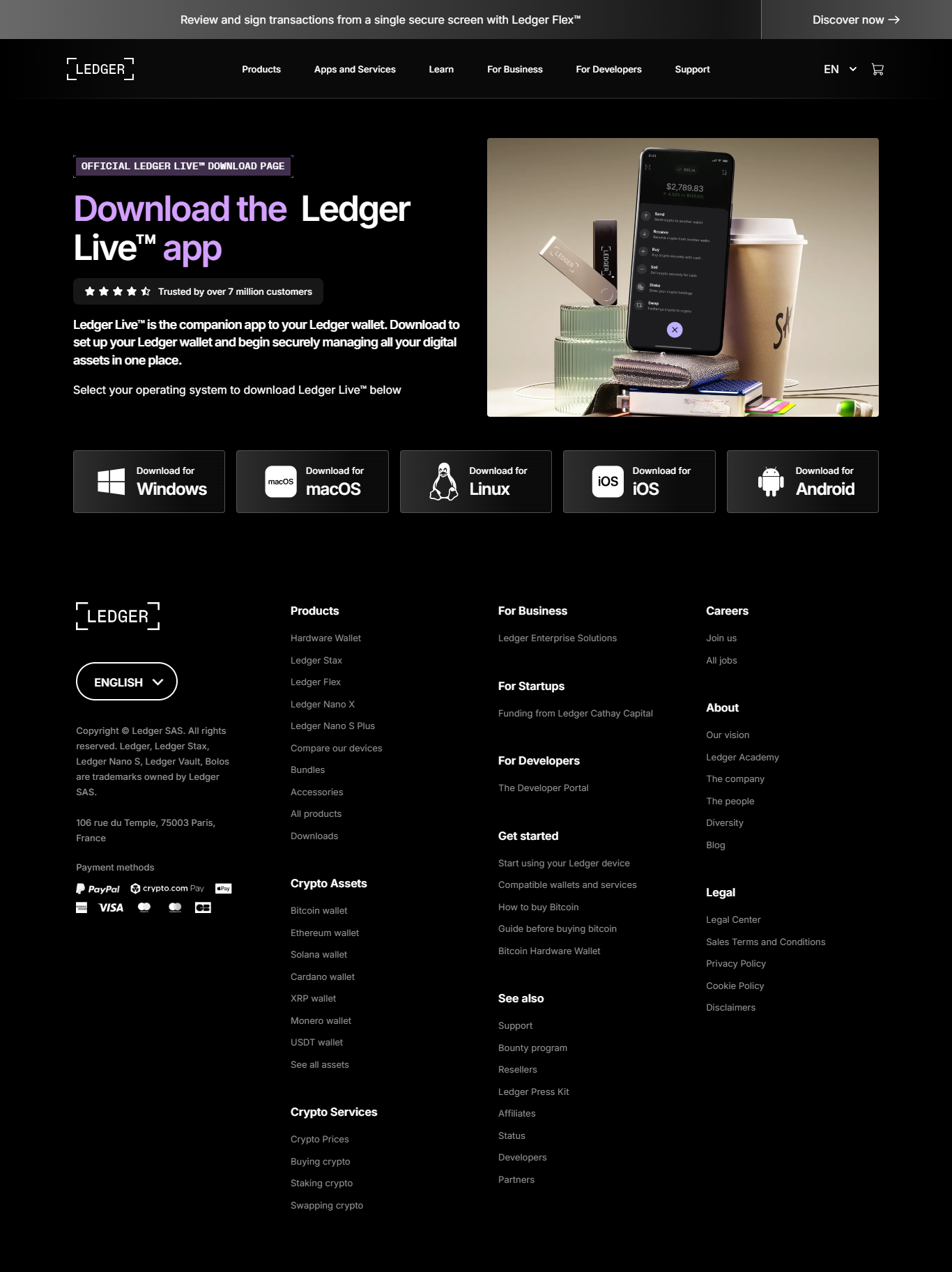
Ledger Live functions as a user-friendly control panel where you view balances, manage accounts, and explore features across different blockchains.
What it does not do is hold your private keys or approve any transaction.
Those responsibilities lie with the Ledger hardware wallet — a device designed around secure elements, cold storage isolation, offline cryptographic signing, and elliptic curve cryptography.
By separating convenience from security, Ledger creates a system where attackers cannot compromise your keys through software alone.
What it does not do is hold your private keys or approve any transaction.
Those responsibilities lie with the Ledger hardware wallet — a device designed around secure elements, cold storage isolation, offline cryptographic signing, and elliptic curve cryptography.
By separating convenience from security, Ledger creates a system where attackers cannot compromise your keys through software alone.
What You Can Do Inside Ledger Live
Ledger Live enables:
- Portfolio tracking across multiple networks
- Sending and receiving assets with device verification
- Installing blockchain apps on the hardware wallet
- Updating firmware for improved protections
- Connecting to DeFi applications safely
A Moment of Insight: Why Physical Verification Changes Everything
Maya opened Ledger Live to perform her first transaction.
She saw the transaction details on her computer, but the approval prompt appeared only on the device.
When she pressed the physical buttons, she understood the principle instantly:
**No software exploit can sign a transaction unless the hardware wallet verifies it.**
This architecture transforms a simple interface into a fortress where offline signing stops remote attacks in their tracks.
She saw the transaction details on her computer, but the approval prompt appeared only on the device.
When she pressed the physical buttons, she understood the principle instantly:
**No software exploit can sign a transaction unless the hardware wallet verifies it.**
This architecture transforms a simple interface into a fortress where offline signing stops remote attacks in their tracks.
How Ledger Live Works Together With the Hardware Wallet
1. Ledger Live Displays Information
Balances, accounts, and transaction history appear here.
2. Keys Remain Inside the Device
Private keys stay sealed in a secure chip.
3. Signing Occurs Offline
No exposure to online threats during signing.
4. You Confirm on the Physical Screen
This prevents unauthorized remote approvals.
The Security Principles Behind Ledger Live
Ledger devices rely on:
Technologies such as hierarchical deterministic wallets and ECDSA signatures add layers of robustness and reliability.
- Secure element hardware for tamper resistance
- Cold storage separation
- Offline signature generation
- Physical verification screens
Technologies such as hierarchical deterministic wallets and ECDSA signatures add layers of robustness and reliability.
Wallet Security Comparison
| Wallet Type | Security | Key Control | Ideal Use |
|---|---|---|---|
| Ledger + Live | Very High | User | Cold storage |
| Software Wallet | Medium | User | Daily spending |
| Exchange Wallet | Low | Exchange | Trading |
Safe Practices When Using Ledger Live
✔ Download only from official Ledger channels
✔ Never type your recovery phrase online
✔ Approve transactions only on the physical device
✔ Keep backups offline and secure
✔ Update firmware regularly
✔ Never type your recovery phrase online
✔ Approve transactions only on the physical device
✔ Keep backups offline and secure
✔ Update firmware regularly
Frequently Asked Questions
1. Does Ledger Live store private keys?
No — keys remain in the hardware wallet.
2. Can transactions be signed without the device?
No — physical verification is mandatory.
3. Supports multiple cryptocurrencies?
Yes — thousands across numerous chains.
4. Is it safe?
Yes — because signing remains offline.
5. How do I recover access?
Restore using your recovery phrase on a new device.
No — keys remain in the hardware wallet.
2. Can transactions be signed without the device?
No — physical verification is mandatory.
3. Supports multiple cryptocurrencies?
Yes — thousands across numerous chains.
4. Is it safe?
Yes — because signing remains offline.
5. How do I recover access?
Restore using your recovery phrase on a new device.
Conclusion — Ledger Live Balances Ease and Security Through Hardware Integration
Ledger Live offers an intuitive interface while the hardware wallet provides the true security through offline signing and physical validation.
This architecture enhances safety by isolating private keys and requiring physical approval for every transaction.
Users who follow safe custody habits benefit from a secure ecosystem that blends user experience with robust cryptography.
Ledger Live simplifies your experience — while the hardware wallet protects your assets at the deepest level.
This architecture enhances safety by isolating private keys and requiring physical approval for every transaction.
Users who follow safe custody habits benefit from a secure ecosystem that blends user experience with robust cryptography.
Ledger Live simplifies your experience — while the hardware wallet protects your assets at the deepest level.